Water is one of the most important substances on Earth. We drink it, cook with it, bathe in it, clean with it, and even see it falling from the sky as rain! But have you ever noticed that water can appear in different forms or states – like ice, liquid water, and steam? In this chapter, A Journey Through the States of Water, we learn how water changes its form and travels around us every single day.
Let’s take a fun and simple journey through the three states of water, the water cycle, and how evaporation and condensation affect our daily lives!
💠 The Three States of Water: Solid, Liquid, and Gas
Water is unique because it exists in three states:
Solid – Ice
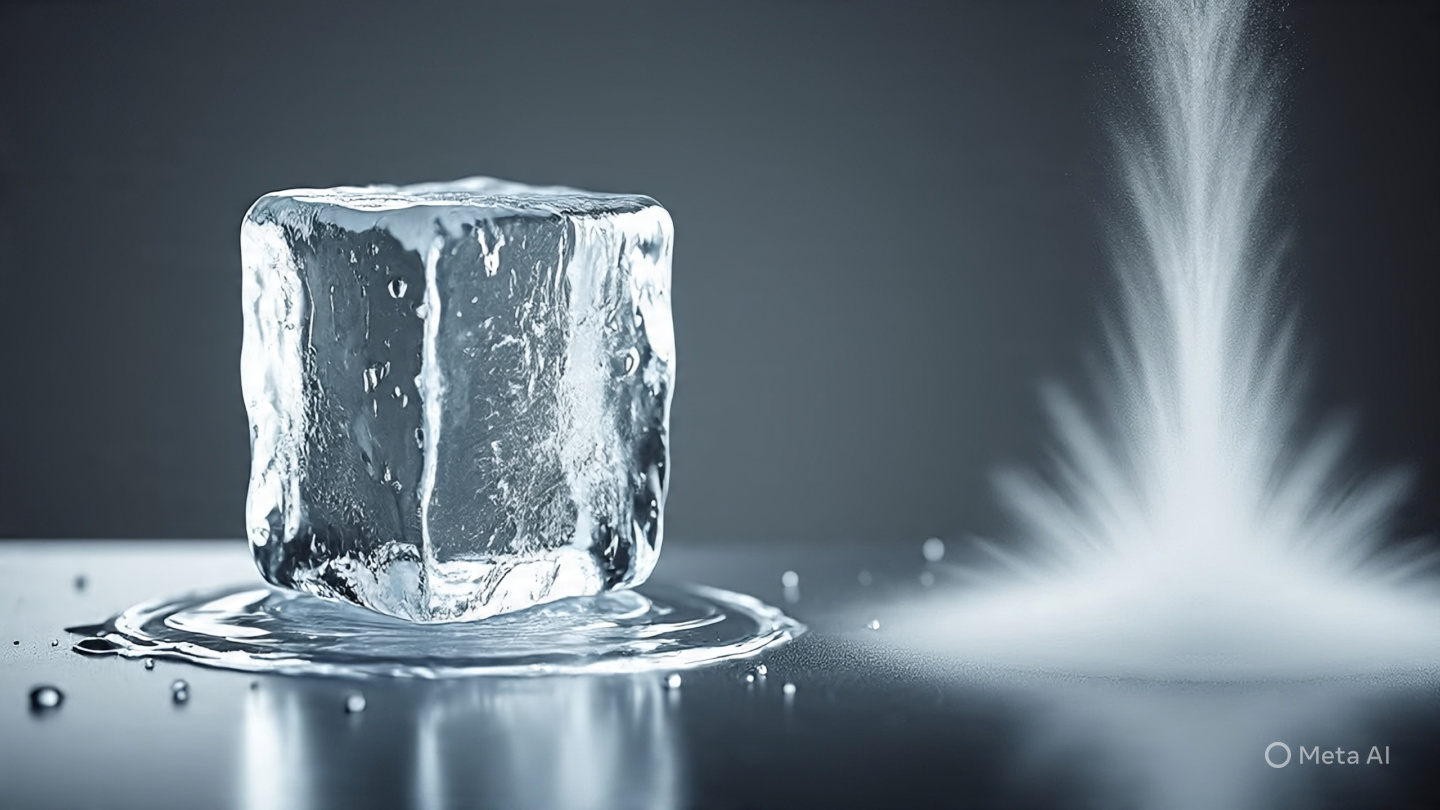
When water is frozen, it becomes solid. Ice keeps its shape and doesn’t flow.
Liquid – Water
In this state, water flows, takes the shape of the container, and can splash or spill.
Gas – Water Vapour
When heated, water turns into vapour (steam), which spreads everywhere and is invisible to our eyes.
➡️ Activity Example:
Place an ice cube in a cup and leave it on the table. The ice melts into water – that’s melting. If you heat this water, it turns into vapour – that’s evaporation.
☁️ Evaporation: Water’s Disappearing Trick
Have you seen puddles after rain that disappear in a few hours? That’s evaporation. It happens when water turns into vapour due to heat – even from the sun or room temperature.
✅ Examples:
Wet clothes drying
Water spilled on the floor vanishing
Sweat drying from our skin
Sanitiser vanishing quickly
Evaporation is faster when:
It’s hot
The air is moving (like when using a fan)
The area of water exposed is more (like a plate vs bottle cap)
The air is dry (less humidity)
🌧️ Condensation: Vapour Becomes Water Again
When water vapour cools down, it becomes liquid again. This is called condensation.
✅ Real-life examples:
Water droplets forming on the outside of a cold glass
Dew on plants in the morning
Steam turning into drops on a steel plate when cooking
Condensation is an important part of the water cycle and helps form clouds and rain.
🌦️ The Water Cycle – Nature’s Beautiful Circle
Water never stops moving on Earth. It evaporates from oceans and rivers, forms clouds by condensation, and then falls back to Earth as rain. This continuous movement is called the Water Cycle.
Steps in the Water Cycle:
Evaporation – Water turns into vapour.
Condensation – Vapour cools to form clouds.
Precipitation – Water falls as rain, snow, or hail.
Collection – Water goes back to oceans, rivers, or underground.
❄️ Melting and Freezing: More Changes in State
Melting: Ice turns into water when heated.
Freezing: Water turns into ice when cooled.
We can also observe this with other things like:
Candle wax melting
Coconut oil becoming solid in winter
These changes happen due to temperature. Heating and cooling are the main reasons water changes state.
💨 Cooling Effect of Evaporation
When a liquid like water or sanitiser evaporates, it takes heat with it – this creates a cooling effect.
✅ Real-life examples:
Matka (earthen pot) keeps water cool.
Rubbing sanitiser feels cold.
Sprinkling water on rooftops cools them during summer.
You can even make a pot-in-pot cooler at home to keep fruits fresh without electricity!
🌍 Water Is Precious – Use It Wisely
Water is not unlimited. Only a small part of Earth’s water is fit for drinking and daily use. As the population grows, water shortage becomes a serious problem. That’s why we must use water carefully, avoid wastage, and keep our rivers, lakes, and oceans clean.
Remember:
💧 Water is our responsibility before it is our right.