

Europe Ablaze: When "Us" Became a Nation (and Things Got Complicated)
Hey, history nerds and future world changers! Have you ever pondered how those bright European flags came to be symbols of passionate pride, as well as intense conflict? Buckle up, because we're about to embark on a crazy journey through European nationalism in the nineteenth century, when "nation" became the most popular new notion on the continent.
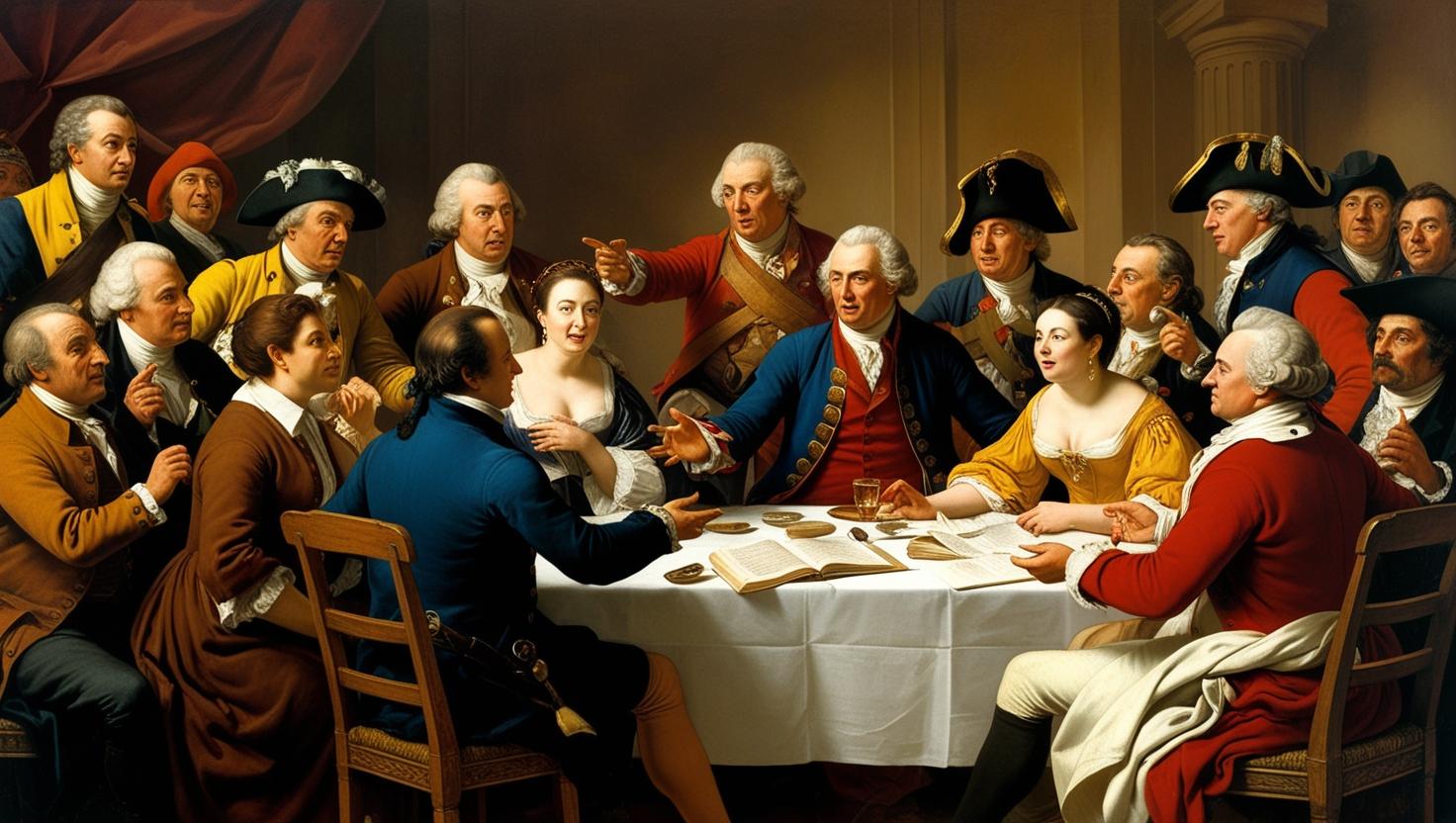
Imagine this: You're in Europe, say, in the late 1800s. Your allegiance might be to your local ruler, community, or even your faith. But what about the "nation"? That is a murky idea. Then bam! The French Revolution sets things off, spreading the concepts of liberty, equality, and fraternity like wildfire. Suddenly, the concept of a shared identity, a single language, and a unified region becomes quite enticing.
The Seeds of Nationalhood:
Consider poets, artists, and philosophers as examples of the Romantic Imagination. They weren't just making art; they were establishing national mythologies! They discovered folklore, composed epic poetry celebrating the past, and created landscapes that screamed "This is our land!"
Consider the Brothers Grimm gathering German folk tales or Caspar David Friedrich painting the hazy, haunting German landscapes.
Language as Weapon (and Hug): Imagine if everyone around you spoke a different accent. Standardizing languages became an effective method for bringing people together. Schools taught the "national" language, the media promoted it, and people suddenly felt a closer bond with those who spoke "their" language.
The Napoleonic Spark: Ironically, Napoleon's conquests, which were originally repressive, encouraged nationalism. As people rejected French control, they discovered something in common: a yearning to be free of foreign dominance.
The rise of nation-states.
This surge in nationalism resulted in the foundation of new nation-states. Italy, for example, was divided into several kingdoms and duchies. However, owing to people such as Giuseppe Garibaldi and Camillo da Cavour, a united Italy arose. Germany was also a patchwork of states. Otto von Bismarck, the "Iron Chancellor," utilized "blood and iron" to establish a unified German Empire.
But, here's the catch...
Nationalism was not all sunshine and rainbows. It had a gloomy side.
Exclusion and "Othering": If everyone was so concerned with "us," who were "them"? Minorities inside countries sometimes experienced prejudice and persecution. The concept of a homogeneous country entailed rejecting anyone who did not "fit."
Imperialism and Rivalry: Nationalism fueled imperialist aspirations. European nations pushed for colonies in Africa and Asia, resulting in fierce conflicts and, ultimately, World War I. The conviction that one's own country was superior justified the conquest and exploitation of other peoples.
Balkan Tensions: The Balkan area, which is a melting pot of races and religions, has become a powder keg. Nationalist movements battled, resulting in bloodshed and instability.
Think about this:
Nationalism may promote unity and growth, but it can also cause separation and violence.
How can we strike a balance between national pride and appreciation for diversity?
Are there any echoes of nineteenth-century nationalism in the globe today?
The emergence of nationalism in Europe was a difficult and revolutionary era. It shaped the contemporary world, both positively and negatively. Understanding its beginnings allows us to better handle the issues of nationalism today. Keep asking questions, discovering, and thinking critically!