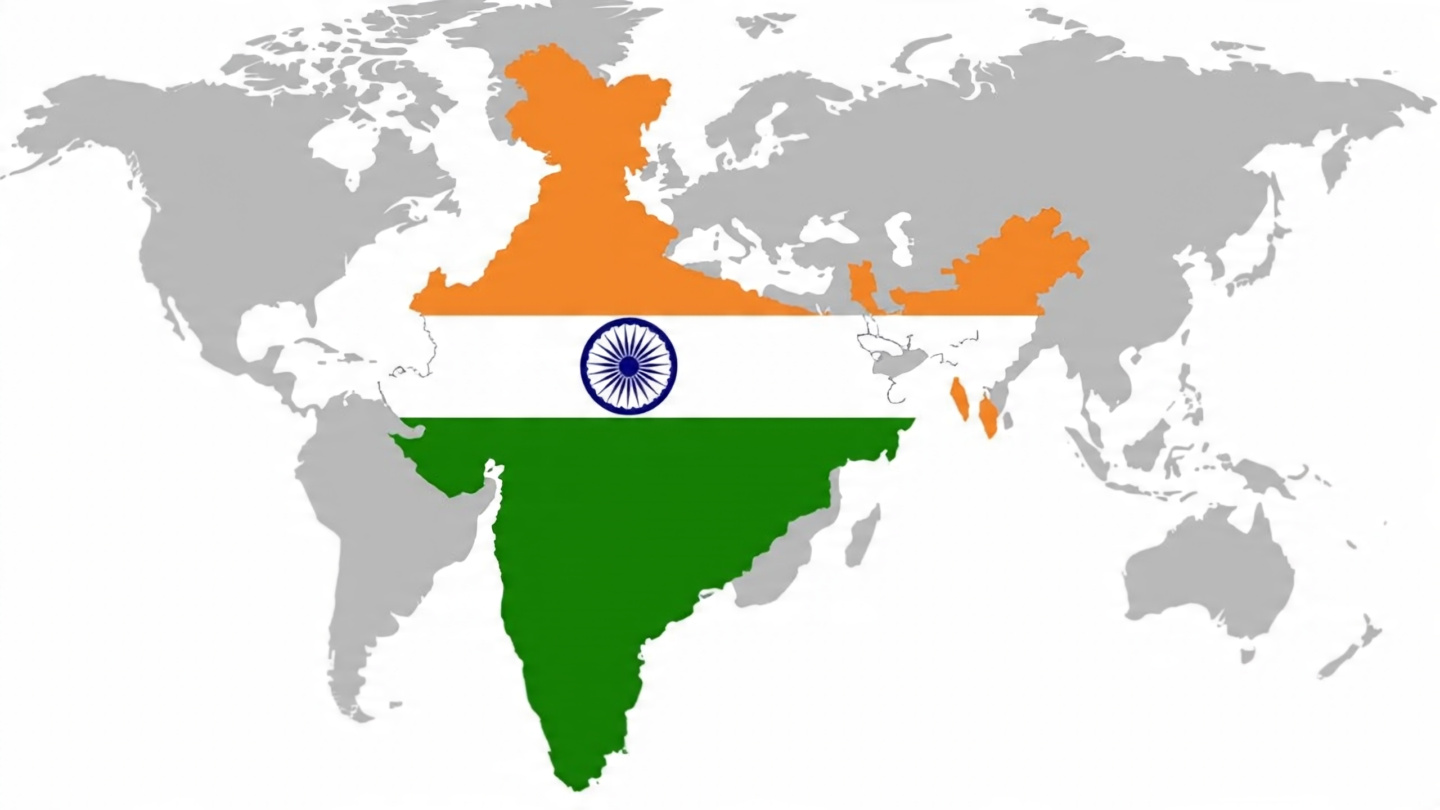
Today, we proudly call our country "India that is Bharat." But did you know that this land has been known by many names throughout history — each with a story that spans rivers, kings, languages, and empires?
Let’s explore how the name "Bharat" came to be and what the world called this ancient land over thousands of years.
Names Indians Gave to India
The Rig Veda, one of the oldest texts in the world, refers to northwestern India as Sapta Sindhava — the land of seven rivers, from the word ‘Sindhu’, meaning river.
As we move forward in time, Indian literature like the Mahābhārata lists many familiar regions — Kashmir (Kāshmīra), Bengal (Vanga), Assam (Prāgjyotiṣha), Kerala, Kutch (Kaccha), and more — showing how geographically aware ancient Indians were.
But when did we get a name for the entire subcontinent?
That’s where Bhāratavarṣha and Jambudvīpa come in.
- Bhāratavarṣha means the “land of the Bharatas,” an ancient Vedic tribe mentioned in the Rig Veda. Over time, this became the cultural and civilizational name for the Indian subcontinent.
- Jambudvīpa, meaning “island of the jamun tree,” was another poetic term used in ancient Indian texts and inscriptions.
One of the most powerful emperors, Aśoka (250 BCE), also used Jambudvīpa in his inscriptions to refer to his empire — which included present-day India, Pakistan, Bangladesh, and parts of Afghanistan.
Later, texts like the Viṣhṇu Purāṇa defined Bharata as the land that stretches from the ocean in the south to the snowy Himalayas in the north. This definition still rings true — and so the name Bhārata remains deeply embedded in our identity.
What the World Called India
- It wasn’t just Indians naming their land — foreigners gave us names too.
- he Persians, who conquered the Indus region around the 6th century BCE, adapted the word Sindhu into Hind, Hindu, or Hidu. At the time, this was purely geographical, not religious.
- The Greeks, borrowing from the Persians, called the land Indoi or Indike — dropping the "h" because their language didn’t include it.
- The Chinese, who saw India as the land of the Buddha, used words like Yintu, Yindu, and Tianzhu — again derived from Sindhu, but also meaning heavenly land in Buddhist context.
- The term Hindustān first appeared in a Persian inscription about 1,800 years ago. It became the standard name for India in Persian and later Islamic empires.
From Sapta Sindhava to Bharat: What It All Means
Each name India has held tells a part of our story — from sacred rivers and ancient tribes to international admiration and spiritual legacy.
Even today, in the Indian Constitution, we say:
“India, that is Bharat…” — honoring every thread in this rich tapestry of identity.